Why Two Hundred West Costs Less Than the Gulf-Front Towers Three Miles South
October 1, 2026
October 1, 2026
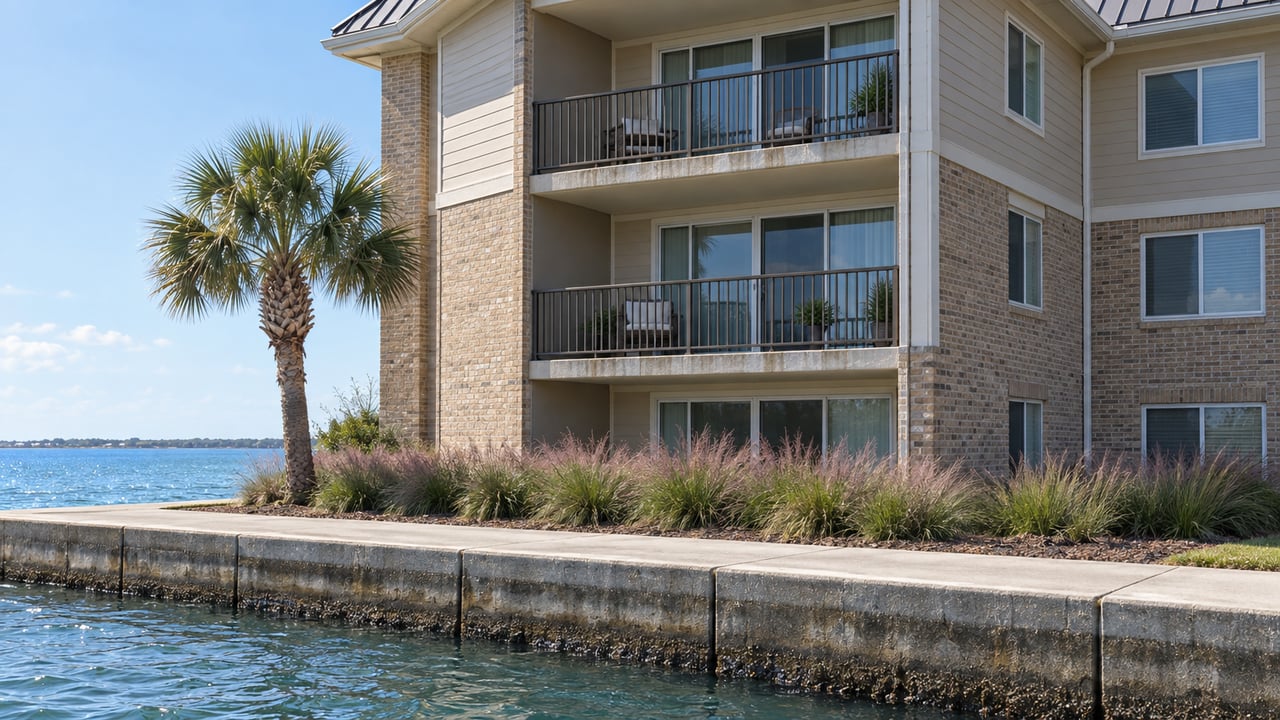
A buyer scrolling listings this fall found unit 501 at Two Hundred West, on the fifth floor at 200 SW Miracle Strip Parkway, with a 23-foot south-facing balcony and a deeded boat slip with a lift, listed at $710,000. Scroll a few miles south to a comparable square footage directly on the Gulf and the number climbs well past a million. The obvious explanation is that one building sits on the beach and the other sits on Santa Rosa Sound. That explanation is incomplete. The line that actually does the pricing work sits lower in the listing, easy to skim past: "200 West is a Peaceful Non-Rental Building."
That phrase, not the water view, explains most of the gap. Two structural facts stack together at Two Hundred West that have nothing to do with how the building looks and everything to do with what it's legally allowed to be used for and where a federal flood map drew a line. Understand both and the price difference between this 37-unit high-rise and the resort towers on Okaloosa Island stops looking like a discount and starts looking like a trade.
Two Hundred West carries a deed restriction against short-term and vacation rental use. Listings for units in the building state it directly. Ownership here means a long-term resident or owner-occupant, not a rotation of week-long guests. That single rule removes a cost category most Gulf-front buyers never see itemized separately: the insurance load, liability exposure, and common-area wear that come from operating a building as an active rental program.
Resort towers with built-in rental programs carry higher master-policy liability limits because the risk profile changes when hundreds of different guests cycle through every year instead of the same owners. Common areas take more wear. Staffing costs for check-in, turnover, and guest services get baked into the monthly assessment whether an individual owner rents their unit or not. None of that exists at Two Hundred West. The building has one population: people who live there.
The trade-off runs the other direction for anyone who wants rental income to help cover the mortgage. Two Hundred West can't produce that income. The deed restriction isn't a policy the HOA could vote to relax next year for the right buyer. It's the reason the building works the way it does, and it should end the conversation fast for an investor running short-term rental math, while starting a different, more useful conversation for a buyer who actually plans to live there.
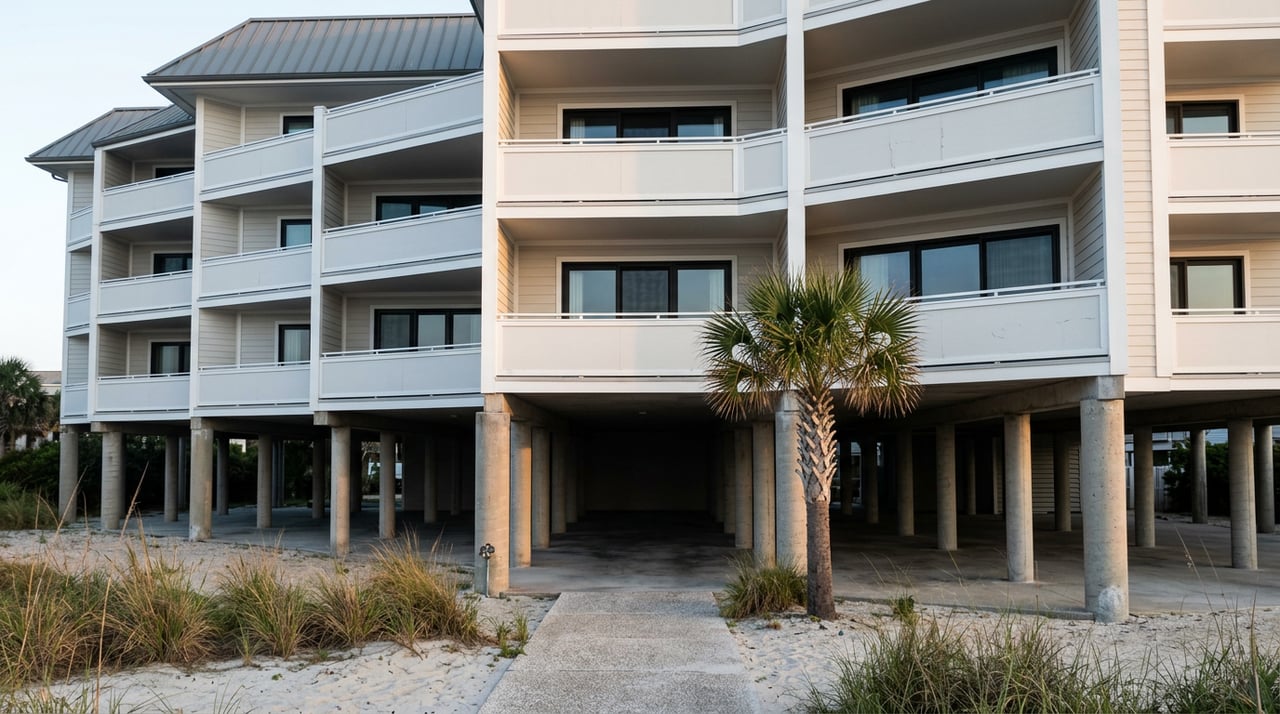
The Gulf-front towers along Okaloosa Island and Scenic Highway 98 sit inside VE flood zones, the highest-risk coastal designation FEMA assigns, reserved for land exposed to direct storm-driven wave action. Harbor-front and bay-front buildings on the Emerald Coast, including sound-front properties like Two Hundred West on Santa Rosa Sound, typically fall into AE zones instead, a lower risk classification. That single line on a flood map moves the insurance bill more than almost any other fact attached to the property.
A realistic annual insurance budget for a Gulf-front condo on the Emerald Coast runs $3,000 to $12,000 or more for wind coverage and $1,500 to $8,000 or more for flood, based on 2026 buyer guide estimates covering Destin, 30A and the surrounding coast. Combined, that reaches $24,000 a year on the high end. Okaloosa County's overall average homeowners premium sits closer to $3,794 a year as of 2026, a figure pulled down hard by everything in the county that isn't sitting directly on the Gulf. Sound-front ownership on the AE side of that line inherits the lower number.
Two Hundred West folds building insurance directly into its HOA assessment, along with water, sewer, cable, trash, grounds keeping, management, and access to the recreational facility. The tax and financial disclosures on the current unit 501 listing spell out the inclusion list in full. That single line item does budgeting work a Gulf-front owner usually handles across three or four separate accounts: a personal HO-6 policy, a standalone flood policy, a wind endorsement, and utilities that move independently from month to month.
| Typical Gulf-front resort tower | Two Hundred West | |
|---|---|---|
| Flood zone | VE, highest-risk coastal classification | AE, sound-front classification |
| Full annual insurance budget | Roughly $6,000 to $24,000+ | Bundled into the monthly HOA assessment |
| Rental policy | Built-in short-term rental program | Deed-restricted, no rentals |
| What the HOA fee includes | Varies by building | Insurance, water, sewer, cable, trash, grounds, management, recreational facility |
Current listings at Two Hundred West have averaged near $794,655 across the building in 2026, with units ranging from roughly 1,600 to 2,100 square feet across two and three-bedroom layouts. That's a real number for a direct-waterfront high-rise with deeded boat slips and a pool, not a discount that signals something is wrong with the building. It's what waterfront ownership costs when the flood zone and the rental policy are both working in the buyer's favor instead of against the budget.
A military family relocating to Eglin Air Force Base or Hurlburt Field gets a stable, owner-occupied building where the neighbor next door isn't a different guest every week, a lower insurance line to plan around on a fixed BAH budget, and a monthly assessment that already accounts for the building's insurance and utilities instead of leaving those as separate line items to track.
A buyer purchasing a permanent second home, someone who wants to use the unit themselves rather than list it, gets direct Santa Rosa Sound access, a deeded boat slip, and a materially lower carrying cost than the equivalent square footage on the Gulf, without giving up anything they were planning to use anyway.
An investor evaluating this building for short-term rental income should look elsewhere on the Emerald Coast. The deed restriction isn't a detail to negotiate around. It's the reason the other two buyers get the pricing they get.
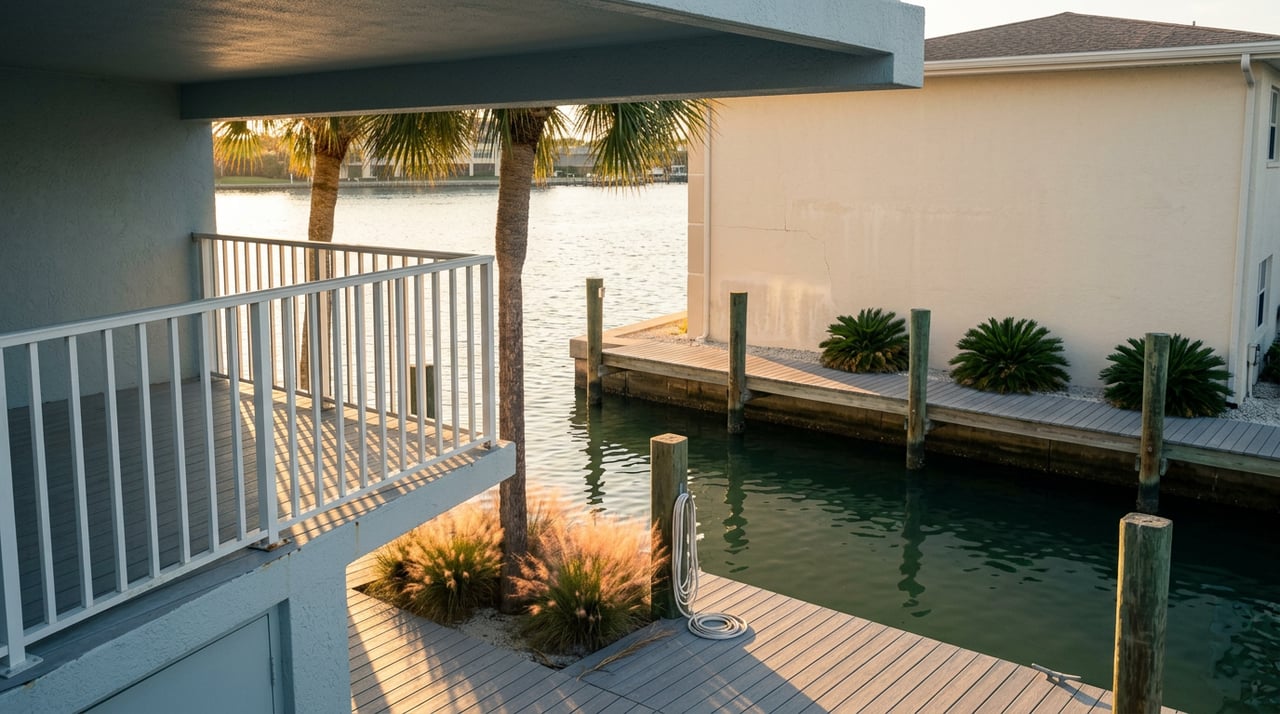
Two Hundred West sits on the south side of Miracle Strip Parkway, just east of Olive Garden, next to Presidio Yacht Club and within reach of Fountainhead and Pirates Bay, two other waterfront condominium communities along the same stretch of sound. Brooks Bridge and Fort Walton Beach Landing Park sit close enough for a short drive. The deeded boat slip with water and electric hookup means the building's water access isn't decorative. From the dock, it's a short run to Crab Island and out to the Gulf by boat, without ever needing to own a Gulf-front address to get there.
Fort Walton Beach occupies a stretch of coastline with Santa Rosa Sound to the south and Choctawhatchee Bay to the north, water access from two directions at a price point most Panhandle cities can't replicate. Eglin Air Force Base runs roughly 10 to 20 minutes from most Fort Walton Beach neighborhoods, and Hurlburt Field sits about 10 to 15 minutes away, close enough that PCS timelines and VA financing show up in a large share of local closings.
None of that requires a Gulf-front address. It requires understanding what a flood zone and a deed restriction actually buy a permanent resident, which is usually more than the view ever could.
If you're weighing a listing like this one against a Gulf-front tower and want the actual insurance and rental-policy math run on a specific unit before you write an offer, Chris Carter can walk through the comparison building by building, not just zip code by zip code.
Stay up to date on the latest real estate trends.
Ready to embark on a rewarding career journey in real estate? Contact us today to explore exciting opportunities with The Chris Carter Team. Your future in real estate starts here! Contact us today to find out how we can be of assistance to you!