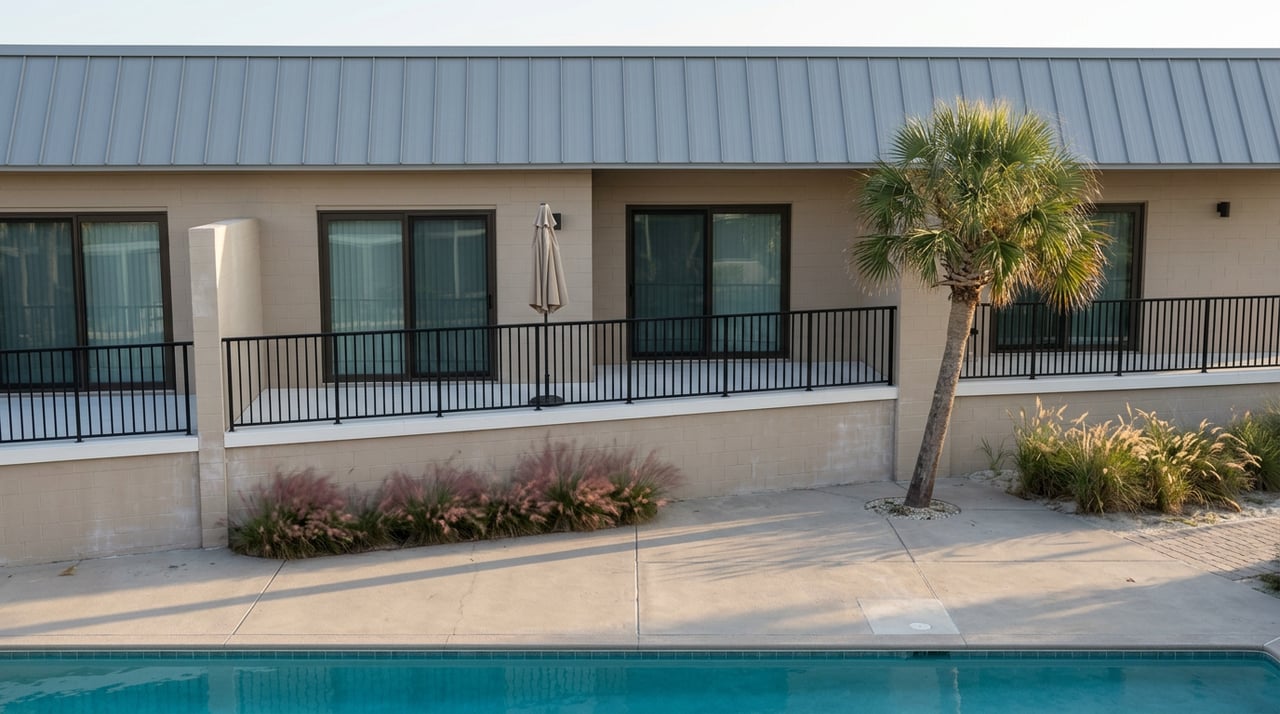
Waters Edge Turns 25 in 2027. The Deadline That Actually Matters Already Passed.
September 24, 2026
September 24, 2026
If you are watching Waters Edge on Okaloosa Island and you know your Florida condo law, you probably have a date circled: 2027, when the 106-unit building crosses 25 years old and trips the state's coastal milestone inspection trigger. That is a reasonable thing to track. It is also the wrong deadline to be watching right now.
The inspection that everyone can see coming is not the one that determines what a Waters Edge owner pays this year, next year, or the year after. That number was set by a deadline that already came and went. Florida's Structural Integrity Reserve Study requirement forced existing owner-controlled associations to complete their SIRS by December 31, 2025, and to start funding those reserves by January 1, 2026. Waters Edge does not get to wait for 2027 to find out what its roof, plumbing, electrical, waterproofing, and load-bearing systems are going to cost. That math was supposed to be locked in months ago.
Florida's milestone inspection law, created by SB 4-D in 2022 and refined by SB 154 in 2023, applies to any condo or co-op building three habitable stories or taller. The trigger age is 30 years statewide, dropping to 25 years for buildings within three miles of the coast. Waters Edge sits directly on the Gulf of Mexico, so the 25-year clock applies. Built in 2002, that puts its first mandatory Phase 1 inspection in 2027.
Phase 1 is a licensed engineer's visual walkthrough of the structure. If it turns up evidence of substantial deterioration, it triggers Phase 2, which involves destructive testing and a much deeper (and more expensive) evaluation. Statewide guidance puts Phase 1 costs anywhere from $8,000 to $150,000 depending on building size, with Phase 2 adding $40,000 to $250,000 or more on top of whatever repairs the findings require.
That 2027 date is the one most buyers will ask about, because it is the one with a hard number attached to it. It is not, however, the number that shows up on this year's HOA budget.
The Structural Integrity Reserve Study is a separate, earlier-arriving requirement. It applies by building height, not age, which is why even brand-new towers need one. For existing associations, the state's deadline to have a SIRS on file was December 31, 2025. Once that study exists, associations can no longer waive or underfund reserves for eight specific structural components: roof, load-bearing walls and primary structural systems, fireproofing and fire protection, plumbing, electrical, waterproofing and exterior painting, windows and exterior doors, and any other item with a deferred cost over $25,000. Full funding against that study was required to begin January 1, 2026.
In other words, the money question at Waters Edge was already supposed to be answered before this article was written. The 2027 inspection will tell the association whether the building matches what the SIRS predicted. The reserve line item on the current budget tells you whether the association believed its own study enough to start paying for it.
There is one piece of good news buried in the statute. If a building's milestone inspection is completed within five years and meets SIRS requirements, that inspection can stand in for the visual portion of the reserve study. Waters Edge is too young for that shortcut to have applied yet, but it means the 2027 inspection and the next SIRS update should be able to move together instead of duplicating engineering fees.
Here is how the two requirements actually line up for a building on this timeline:
| Requirement | What it covers | Deadline that applies to Waters Edge | Where it stands as of September 2026 |
|---|---|---|---|
| Structural Integrity Reserve Study | Funding plan for 8 structural components | Existing associations: completed by Dec. 31, 2025 | Should already be on file |
| Reserve funding | Cash contributions toward SIRS-identified needs | Begins Jan. 1, 2026 | Should already be underway |
| Milestone Inspection, Phase 1 | Engineer's structural walkthrough | Building turns 25 in 2027 (coastal trigger) | Not yet due |
| Milestone Inspection, Phase 2 | Destructive testing, only if Phase 1 flags concerns | Triggered only if Phase 1 finds deterioration | Not applicable yet |
Building size is where the math gets interesting, and it is worth being precise about what it does and does not do. A bigger unit count does not lower the total bill an association eventually pays for a roof or a waterproofing project. It changes how that bill is divided.
Take the top of the Phase 1 cost range, $150,000, purely as an illustration. Divided across 106 units, that works out to roughly $1,400 per owner. Divide the same invoice across a 30-unit boutique building and each owner is looking at roughly $5,000. That is the arithmetic behind a pattern worth understanding if you are comparing Waters Edge to a smaller building like Summerlin, where we have written before about how a fixed engineering bill lands harder on fewer doors.
The catch is that this dilution only works in the buyer's favor if the reserves were actually funded on schedule. A large denominator does not help if the association deferred its SIRS contributions and gets hit with a special assessment instead of a reserve line item. Special assessments tied to milestone findings have run from the low five figures to well over $100,000 per unit at buildings that let reserves lapse for decades. Size cuts the bill per owner only when the bill is being paid the boring, scheduled way.
For a buyer looking at a unit here, three documents do most of the work:
It is also worth checking whether the building appears on Fannie Mae's condo eligibility list. Buildings flagged for unresolved structural issues or funding gaps can lose access to conventional financing, which narrows the buyer pool to cash purchasers and can affect resale timing even if you are not the one financing.
Florida law requires sellers to disclose known assessments, current or pending. The practical risk is not the disclosure itself, it is the closing delay that happens when a seller has to go find these documents after an offer is already in hand. An association that completed its SIRS on schedule and has a clean paper trail on reserve funding gives a listing agent something concrete to hand a buyer's agent on day one, rather than a promise that everything is fine.
Does Waters Edge have to complete its milestone inspection in 2027, or could the timeline shift? The 25-year coastal trigger is based on the certificate of occupancy date. Local building officials can require an earlier inspection in some cases, but they cannot push a coastal building's first inspection later than the 25-year mark.
If the SIRS already shows full funding, does that mean no special assessment is coming? It means the association planned for the costs the study identified. It does not guarantee the 2027 inspection won't find something the visual study missed, which is why Phase 2 exists as a separate, deeper check.
Can a buyer still get a conventional loan on a unit here? That depends on the building's current standing with Fannie Mae and the lender's own overlay requirements. Ask your lender to check the building's status before you get attached to a specific unit.
What happens to reserve funding right after the 2027 inspection? Current law allows associations to pause or reduce reserve contributions for up to two years following a completed milestone inspection, which gives boards room to redirect money toward any repairs the inspection identifies.
Buying or selling at Waters Edge means asking about two clocks instead of one. If you want help reading the SIRS, the budget, and the board minutes before you write an offer, or before you list, the Chris Carter Team works this exact question across South Okaloosa Island every week. Reach out and we'll walk the paperwork with you before it becomes a surprise at the closing table.
Stay up to date on the latest real estate trends.
Ready to embark on a rewarding career journey in real estate? Contact us today to explore exciting opportunities with The Chris Carter Team. Your future in real estate starts here! Contact us today to find out how we can be of assistance to you!